Dr. Vikramjeet Singh Senior Scientist
Institute for Experimental Immunology and Imaging
University Duisburg-Essen
Universitätstr. 2
45141 Essen, Germany
Education
2009-2012 : Ph.D. Neuroscience, University of Veterinary Medicine Hannover, Germany
2007-2009 Master in Neuroscience, University Louis Pasteur, Strasbourg, France
2003-2007 Bachelor in Human Pathology, Garhwal University, Srinagar, India
2000-2003 Diploma in Human Pharmacy, State Board for Technical and Industrial Training, Chandigarh, India
Work experience
2020-Present Senior Scientist, Institute for Experimental Immunology and Imaging, Essen, Germany
2018-2020 Postdoctoral Fellow, Institute for Experimental Immunology and Imaging, Essen, Germany
2014-2018 Postdoctoral Fellow, Institute for Stroke and Dementia Research, Munich, Germany
2013-2014 Postdoctoral Fellow, Hannover Medical School, Hannover, Germany
Grants
- Deutsche Forschungsgemeinschaft 2020-2024
- TRR332 Strategic project funding 2025-2025 (Glucose sensor mouse)
Awards and scholarships
- Springer Medizin Gala Award Nomination 2024
- TRR332 Best Paper Award 2024 (Ph.D. student Ali A. Tuz)
- LMU Excellent Travel Research Award in 2015
Invited speaker at conferences
- IBRO Neuroscience School at Sfax University, March 2023, Tunisia
- NeuroGASTRO, September 2023 meeting-Bucharest, Romania
Few Poster Presentations in 2025 and 2024
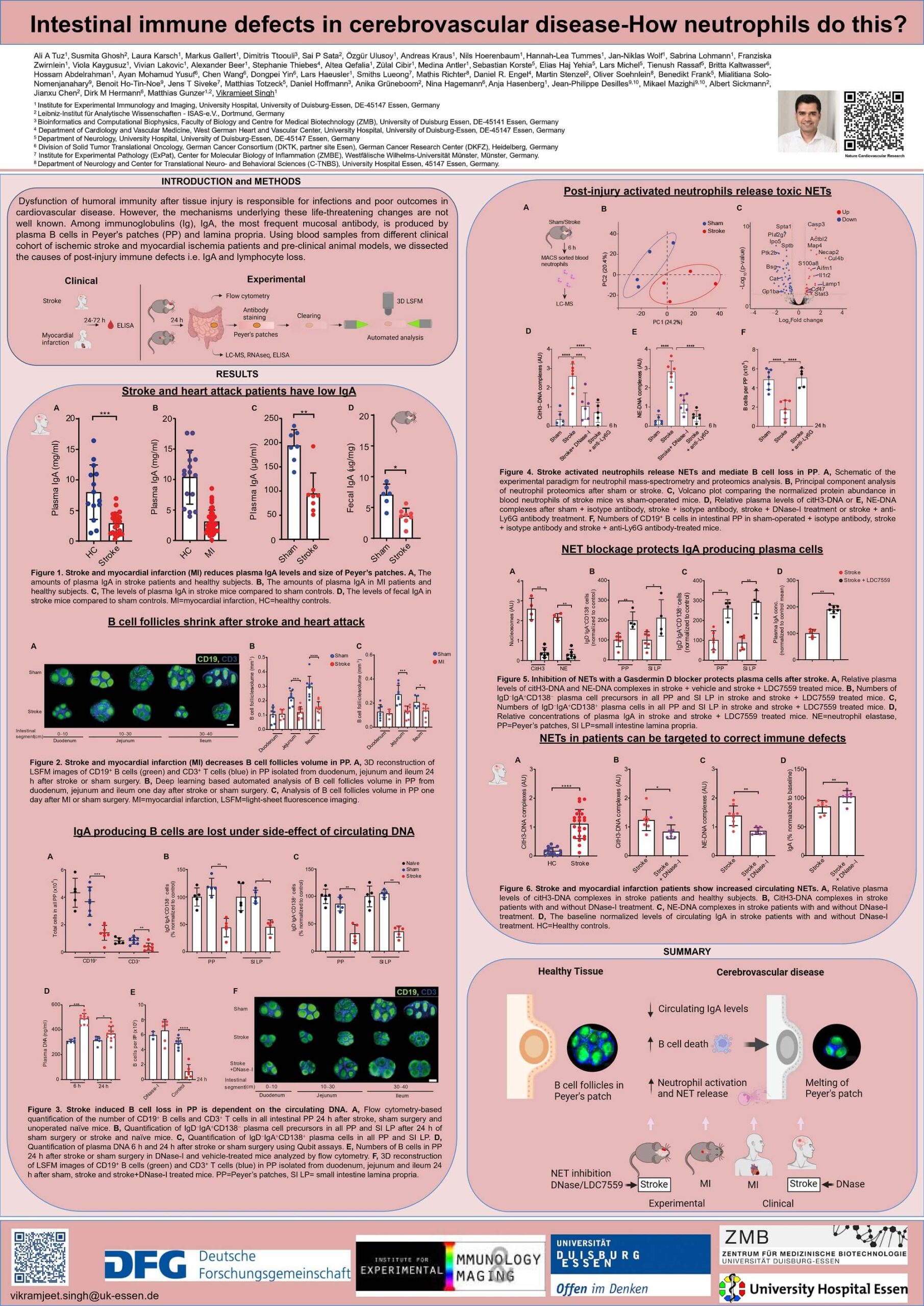
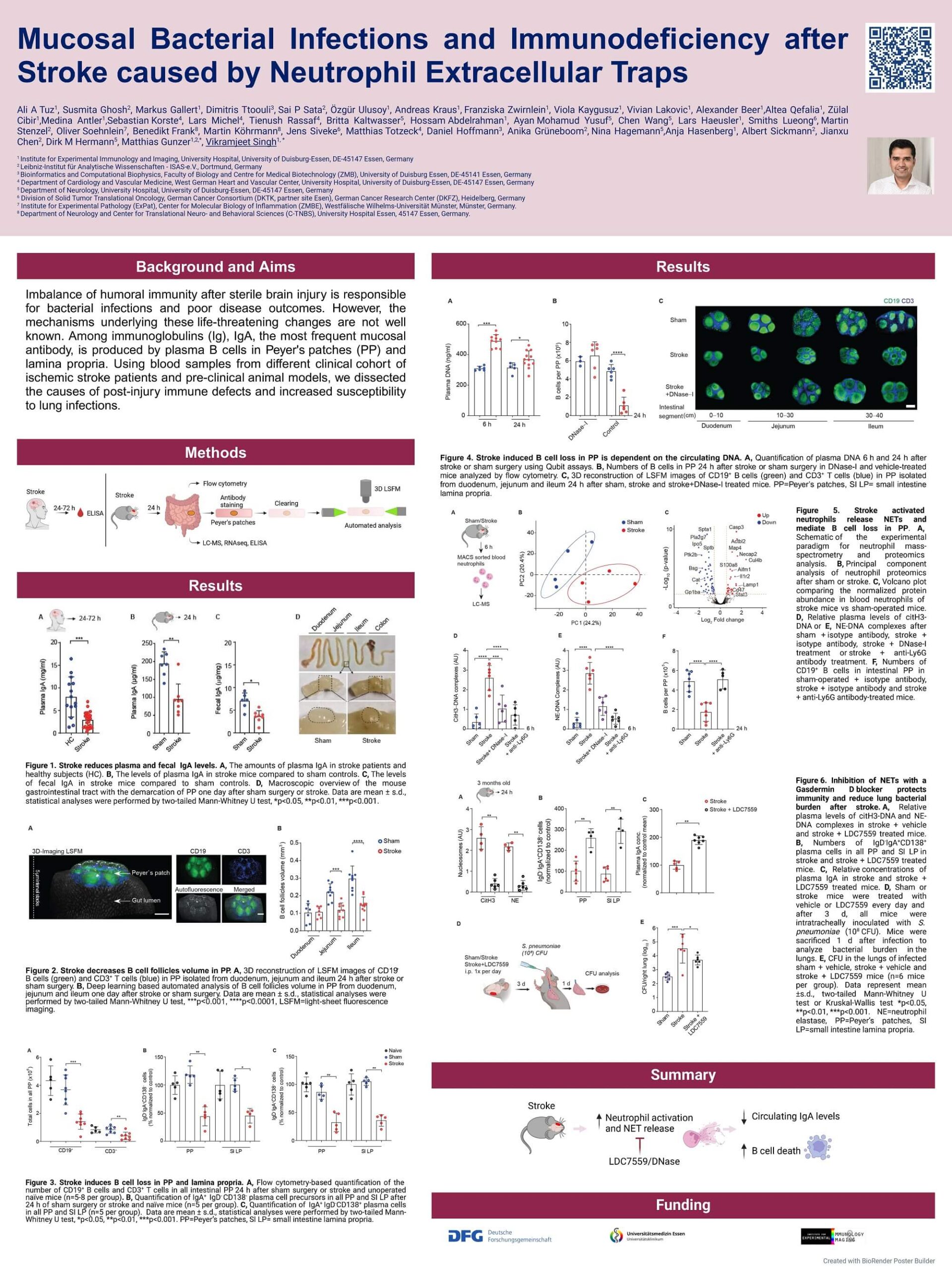
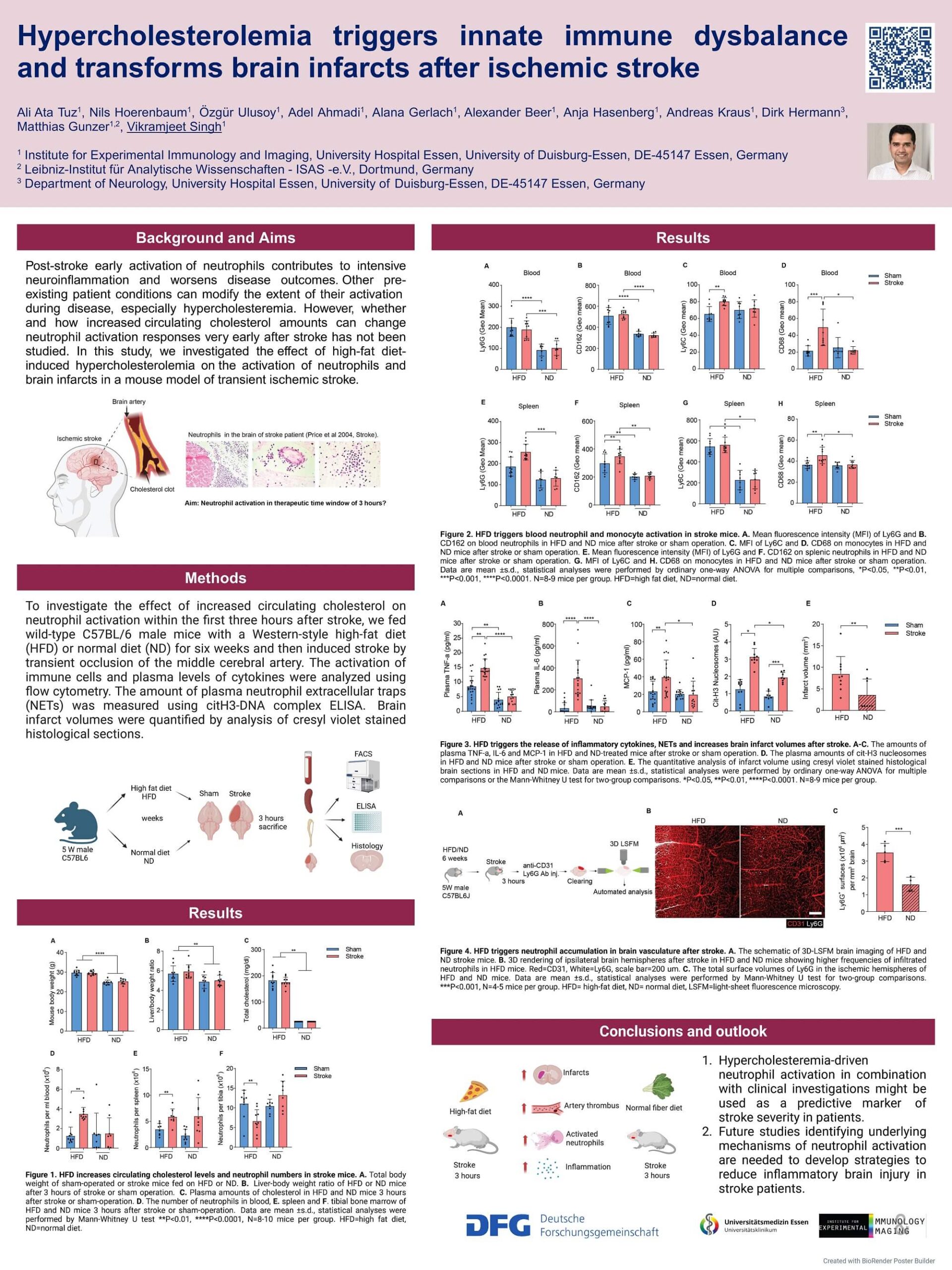
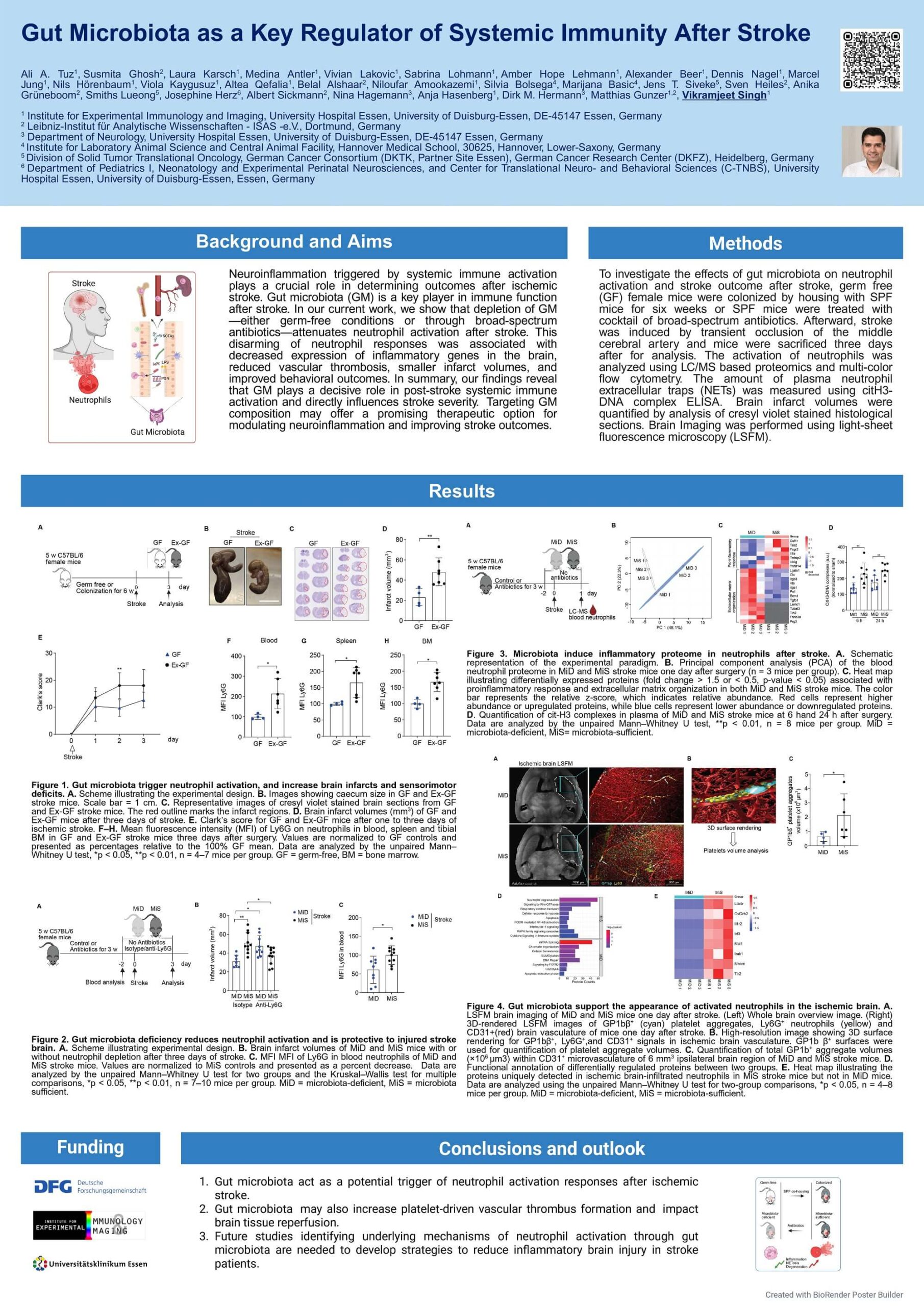
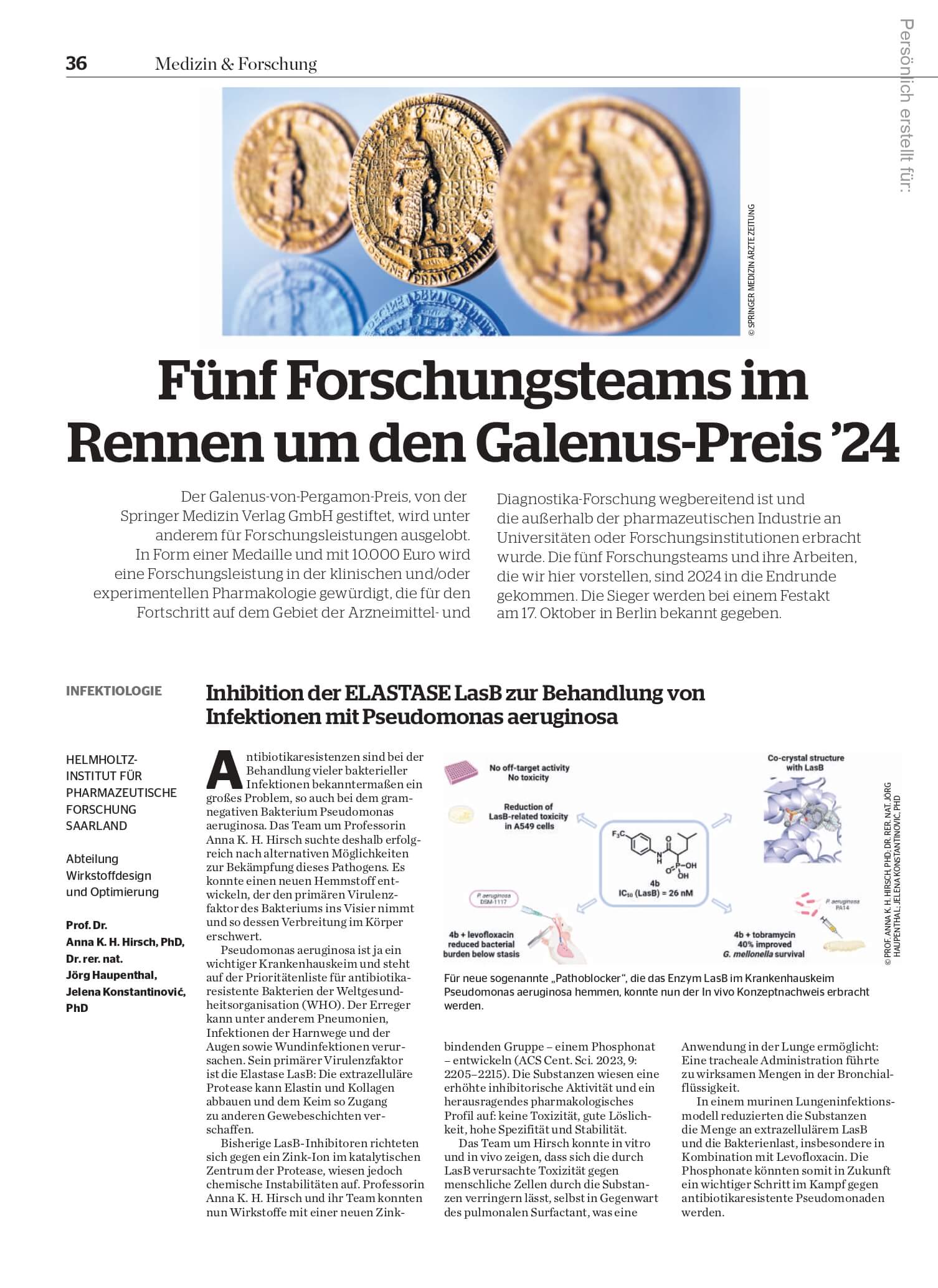
Nominated Research Work for Galenius Prize 2024, Berlin
Research Areas
Neuroimmunology, neuroinflammation, and gut microbiota-immune-brain axis.
Approaches
Expertise in mouse models of stroke and immunology (FELASA C certification), flow cytometry, light-sheet, and confocal microscopy, and proteomics.
Publications (Recent 10 first/last author)
1. Tuz A, Ghosh S, Karsch L, Antler M, Lakovic V, Lohmann S, Lehmann A, Beer A, Nagel D, Jung M, Hörenbaum N, Kaygusuz V, Qefalia A, Alshaar B, Amookazemi N, Bolsega S, Basic M, Siveke J, Heiles S, Grüneboom A, Lueong S, Herz J, Sickmann A, Hagemann N, Hasenberg A, Hermann D, Gunzer M, Singh V. Gut microbiota deficiency reduces neutrophil activation and is protective after ischemic stroke. J Neuroinflammation 2025 May. With DFG funding.
2. Tuz A, Hoerenbaum N, Ulusoy Ö, Ahmadi A, Gerlach A, Beer A, Kraus A, Hasenberg A, Hagemann N, Hermann D, Gunzer M, Singh V. Hypercholesterolemia triggers innate immune dysbalance and transforms brain infarcts after ischemic stroke. Frontier Immunology, 2025 Jan. With DFG funding
Publications (Recent 7 co-author)
1. Luo J, Molbay M, Chen Y, Horvath I, Kadletz K, Kick B, Zhao S, Al-Maskari R, Singh I, Ali M, Bhatia HS, Minde DP, Negwer M, Hoeher L, Calandra GM, Groschup B, Su J, Kimna C, Rong Z, Galensowske N, Todorov MI, Jeridi D, Ohn TL, Roth S, Simats A, Singh V, Khalin I, Pan C, Arús BA, Bruns OT, Zeidler R, Liesz A, Protzer U, Plesnila N, Ussar S, Hellal F, Paetzold J, Elsner M, Dietz H, Erturk A. Nanocarrier imaging at single-cell resolution across entire mouse bodies with deep learning. Nature Biotechnology, 2025 Jan.
Teaching Experience
Teaching experience
Providing lectures to bachelor’s and master’s students at the University Duisburg-Essen,
Essen.
1. Anatomy and physiology of the central nervous system in 2019-2025.
2. Gut microbiota-immune interactions in human intestinal disorders in 2019-2025
3. Practical course on immunology and microscopy methods in 2018-2024
4. Science poster reviewer for “Tag der Forschung, University Hospital Essen” in 2018-2023.
Research master student’s supervision (Recent five out of twenty-four)
1. Nils Hörenbaum, University Duisburg-Essen (M.Sc. 2025), “Impact of high-fat diet on neutrophil activation and brain infarcts within three hours after ischemic stroke”.
2. Medina Antler, Heinrich-Heine-University, Düsseldorf ((M.Sc. 2024), “To understand the contribution of microbiota-dependent neutrophil activation on stroke outcome using germfree and antibiotic-treated mouse models“.
3. Vivian Lakovic, Heinrich-Heine-University, Düsseldorf (M.Sc. 2024), “To investigate the impact of intestinal microbiota on neutrophil activation and brain microvascular thrombus
formation using mass spectroscopy and light-sheet fluorescence microscopy“.
4. Amber Hope Lehmann, University Rostock (B.Sc. 2024), “Investigating the impact of different chemical and microbial stimuli on the formation of NETs”.
5. Ulusoy Oezgur, University Duisburg-Essen (M.Sc. 2023), “Investigation of the activation responses of neutrophils in different immune organs after acute brain injury”.